


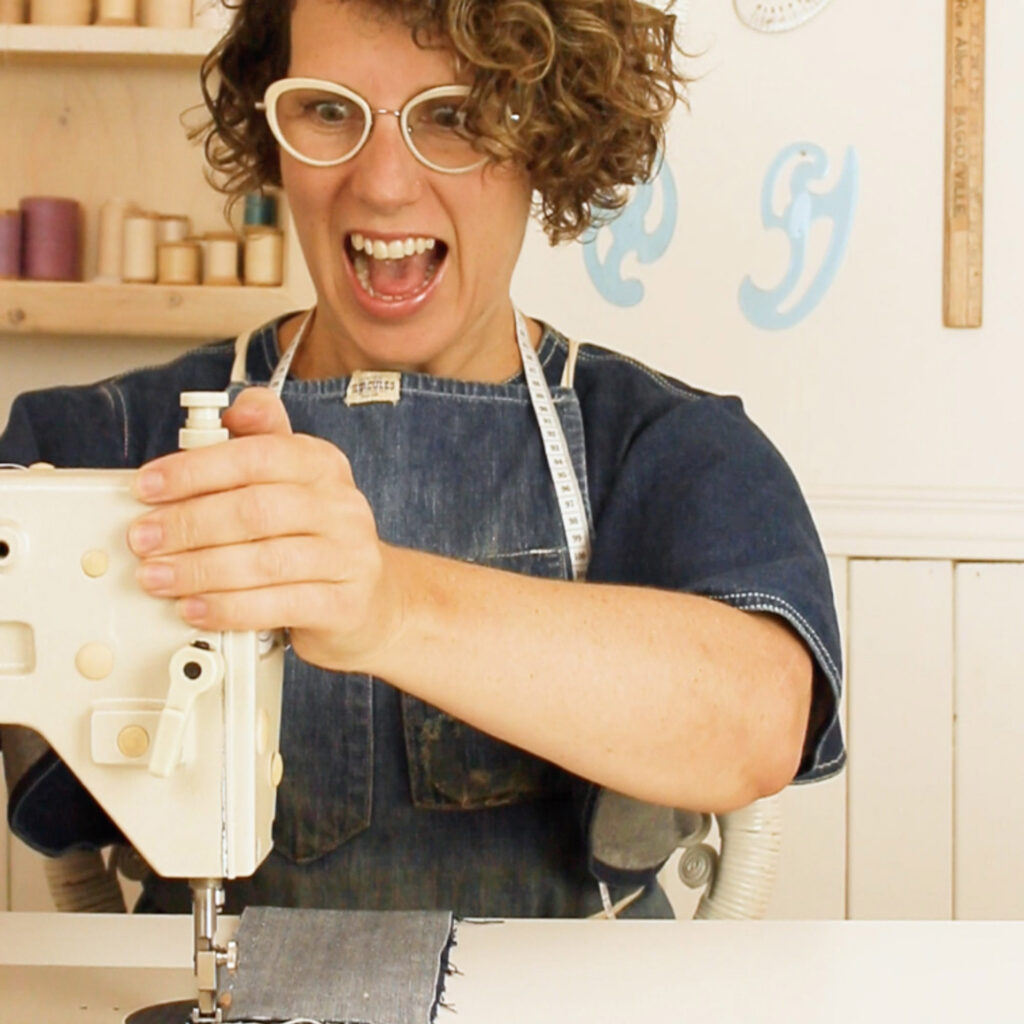
It can be frustrating not to sew properly when you're just starting out. Often, it's simply a series of small oversights or mistakes that make everything feel off. I always encourage participants in my beginner sewing classes to be a little bit like cowboys—meaning, don’t let a lack of knowledge intimidate you. Just go for it and sew! This post is here to help you get started with confidence.
Looking forward to sewing with you xo.
RESPECT THE GRAINLINE OF THE FABRIC

The grainline of the fabric refers to the direction of the fabric’s length. It indicates the direction in which the fabric is most stable. A fabric is made up of warp threads (vertical) and weft threads (horizontal). The warp thread represents the fabric’s grainline. When cutting a garment from fabric, it is preferable to cut it along the grainline to ensure stability and proper drape.
IDENTIFYING THE RIGHT AND WRONG SIDE OF FABRIC

The right side of the fabric is the visible, pretty side that will be on the outside of the finished garment or item. The wrong side is the less attractive side that will be on the inside. Generally, fabrics are assembled with right sides together so that the seams are inside the garment.
PIN THE FABRIC PROPERLY

When pinning fabrics, make sure to place the pin perpendicular to the edge of the fabric, inserting them in and back out to create a small pleat on top. Before sewing, take the time to pin the two layers of fabric together, this ensures stability and facilitates sewing, ensuring a more precise and clean final result.
Find out about my favourite sewing tools here
USE NOTCHES

Notches are small marks or cuts on the edge of fabric pieces to help align them during sewing. They ensure accurate matching for seams, darts, and construction points. Transfer notch markings from your pattern to the fabric when cutting. Make a small snip about 1/8 inch deep without cutting too far.
Find out about my favourite cutting tools here
START AND FINISH A SEAM WITH A BACKSTITCH

A backstitch, reinforces a seam to prevent it from coming undone. It is essential to begin and end each seam with a backstitch. To execute it: lower the presser foot, take a few forward stitches, switch to reverse, then switch back to forward stitching. A well-executed backstitch measures approximately 1 cm (0.5 inches).
LOWER THE PRESSER FOOT BEFORE SEWING

The presser foot holds the fabric in place during sewing. There are several types of presser feet, each adapted to a specific task such as standard stitching, zippers, buttonholes, gathering, etc. It is essential to lower the presser foot before sewing and to lift it once the sewing is completed, to cut the thread and remove the fabric. If the foot is not lowered during sewing, it can create a large knot of thread under the stitching, making it impossible to finish the seam.
SEAM ALLOWANCE

Seam allowance is the margin of fabric between the seam and the fabric edge. Next to the presser foot, there are guide lines. By aligning the edge of the fabric with one of these lines, you get a seam allowance corresponding to the indicated width. In the example in the photo, I sew with a seam allowance of 0.5 inch, which is about 1 cm
I hope you’re feeling a little more confident to get started now! Feel free to ask me any questions in the comments :)
If you want to learn more about the essential sewing materials for beginners, I invite you to check out this article. Cheers xo
3 replies on “7 ASTUCES DE COUTURE POUR DÉBUTANT“